Nyyon · Blog
Open-Sourcing the Build: The WhatsApp Digest Play
Break what you build into small standalone tools and open-source them. The WhatsApp digest proves you are a builder better than any case study.
The best proof you can ship is a tool someone else can run. I built a small WhatsApp digest, a free standalone local tool that watches groups and drafts quick responses to opportunities that are very easy to miss. It is not a deck. It is not a testimonial. It is a working thing other people can hold. That is the play: take what you build, break it into small building-block units, and open-source the pieces that stand on their own. Each one becomes a post. Each one is genuinely useful. Each one makes you look like a proper builder, because you actually did the thing.
The dominant pattern: prove capability with words
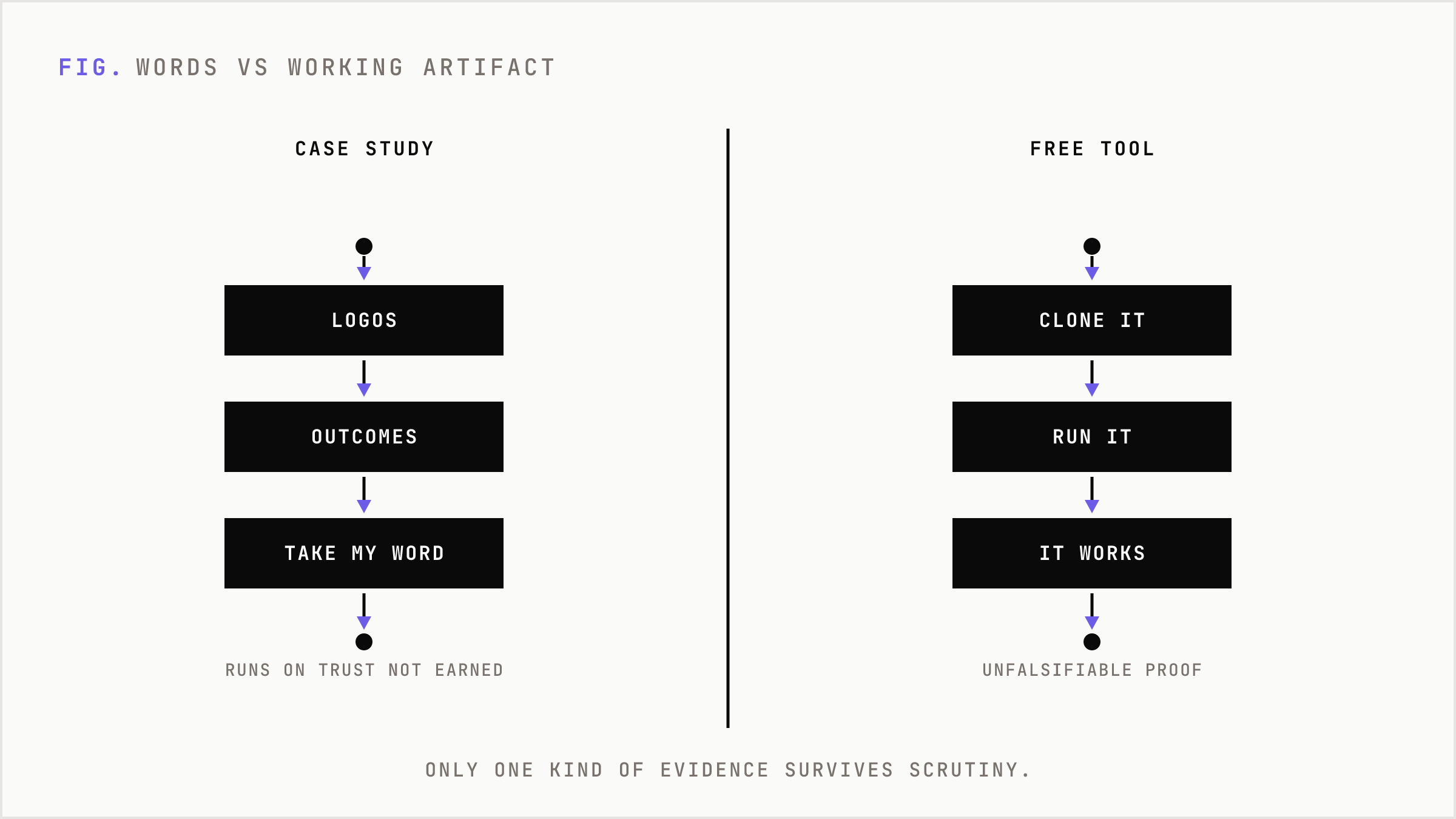
Most operators selling AI capability sell it the way agencies have always sold: case studies, logos, a pitch deck full of outcomes you cannot verify. The reader has to take your word for it. The format is built on trust you have not earned yet.
The problem is that words about building and actual building have stopped looking different. Everyone now writes the same confident sentences about orchestration and agents and routing. The market is flooded with people who can describe a system and have never shipped one. A paragraph is no longer evidence of anything.
So the claim and the proof have come apart. You say you can build. The reader cannot tell whether you can. The whole conversation runs on assertion.
The mechanism: ship the building block, not the brochure
The fix is to close that gap with a thing instead of a sentence. Build something small enough to stand alone, useful enough that a stranger wants it, and put it out for free.
Open-sourcing the build is the practice of breaking a larger system into reusable, standalone units and releasing the ones that work on their own as free tools.
This is the same build-once logic we use everywhere else. The gateways-tools-workflows model exists so you build a capability once and reuse it. The diagram engine exists so a visual gets built once and reused across posts. Open-sourcing is that principle aimed outward. You already cut the system into parts to keep it sane internally. Some of those parts are good enough to hand to someone else.
The WhatsApp digest is exactly that. It started as a piece of a larger command center, a scaffold of the orchestration layer I built for a client. Most of that system is wired into one business and one set of data. But the digest is not. It watches groups, surfaces the messages worth answering, and drafts fast responses to opportunities you would otherwise scroll past. It needs no account, no platform, no permission. It runs locally. That makes it shippable on its own.
Why a free tool beats a case study
A case study tells the reader you can build. A tool lets the reader watch you build, then run the result. Those are different kinds of evidence, and only one of them survives scrutiny.
This matters more right now than it usually does. There is a real scarcity of effective builders, the people who can take an AI capability and turn it into something that holds together and ships. The market is full of describers. The way you separate yourself from them is not a better description. It is a working artifact with your name on it.
The standalone tool does three things a case study cannot:
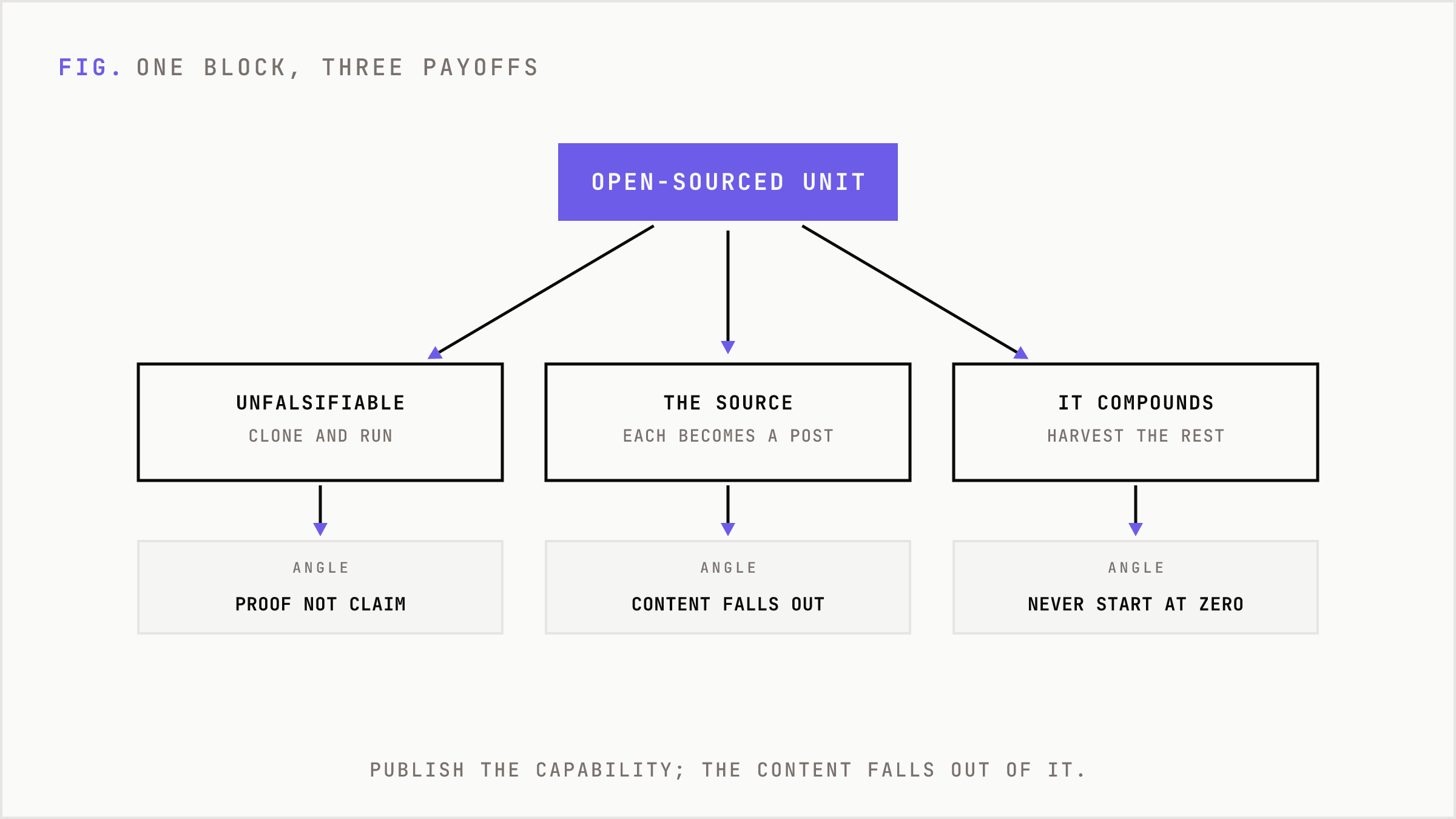
One, it is unfalsifiable proof. The reader can clone it and run it. There is no taking your word for anything. The code either works or it does not, and if it works, you built it.
Two, it is the source. The interview you are reading is one of these units. The digest is another. Each becomes a post, each becomes something you can share, each is the source material for the next thing. You are not generating content about your capability. You are publishing the capability, and the content falls out of it.
Three, it compounds. Once you have cut the system into building blocks to release one of them, you can see which others enclose into a single-use tool you can serve to other people. The first release teaches you the shape of the rest. That has a ton of value, because you are not starting from zero each time, you are harvesting from a system you already built.
The reusable test: which blocks ship
Not every part of a build is open-sourceable, and pretending otherwise wastes the play. The test is the same one that governs the gateways-tools-workflows model: does this unit need the rest of the system to mean anything?
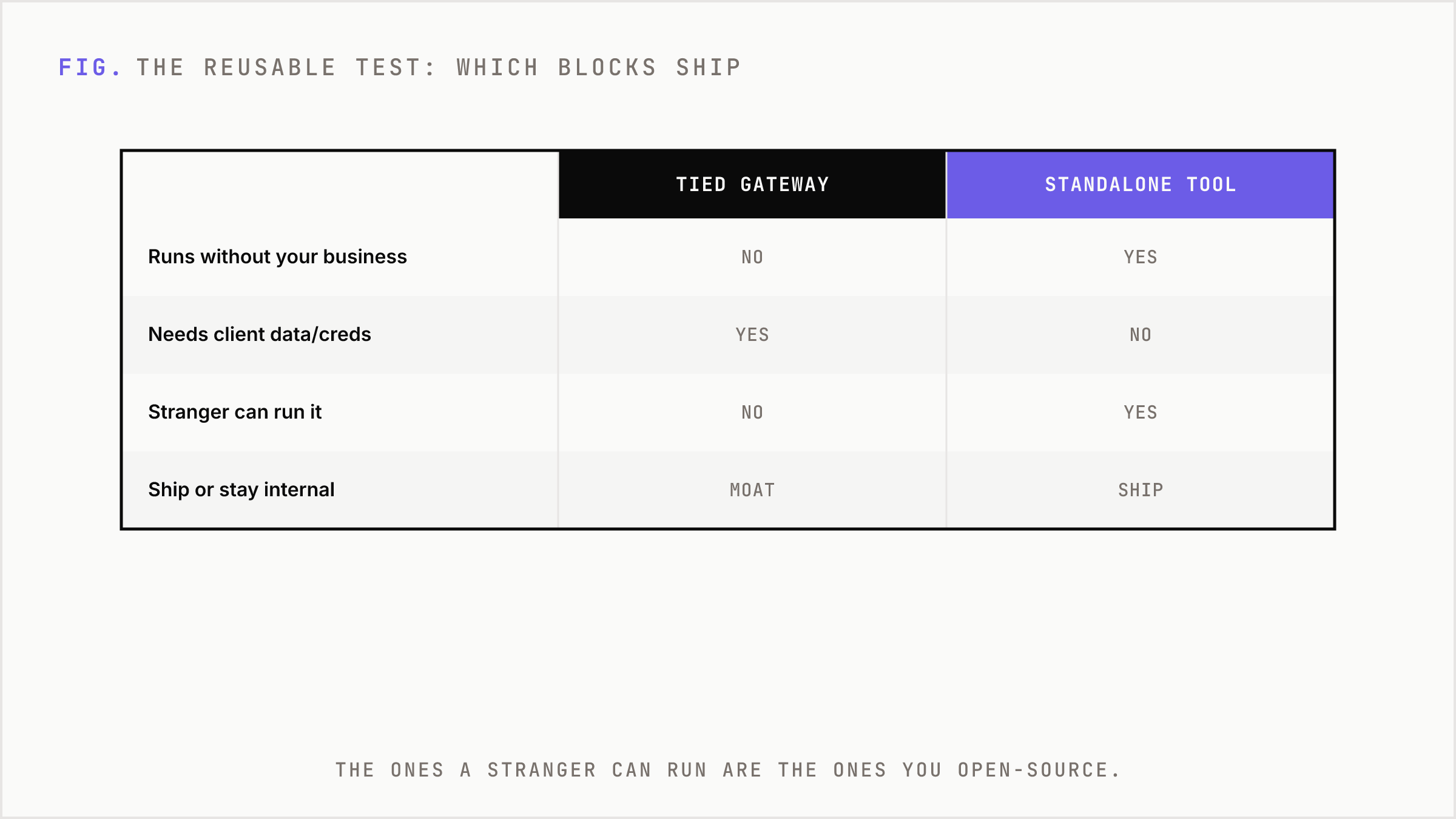
A gateway tied to one client's CRM does not ship. It carries the data, the credentials, and the context of one business. A tool that does one clean thing against inputs anyone has, that ships. The digest passes because it does not depend on the command center it came from. It is a tool in the proper sense: a defined capability with a clear job, not a workflow stitched into someone's operation.
So the rule is simple. Cut the system into units the way you already do to keep it maintainable. Then look at each unit and ask whether a stranger could run it without your business attached. The ones that can are the ones you open-source. The ones that cannot stay internal, and they become the moat.
What changes, what stays, and the honest trade-off
What changes is your output. You stop publishing claims and start publishing artifacts. The blog stops being a place where you say things and becomes a place where you release things. The interview, the digest, the next small tool: each is a post and each is a source, and the work and the content stop being separate jobs.
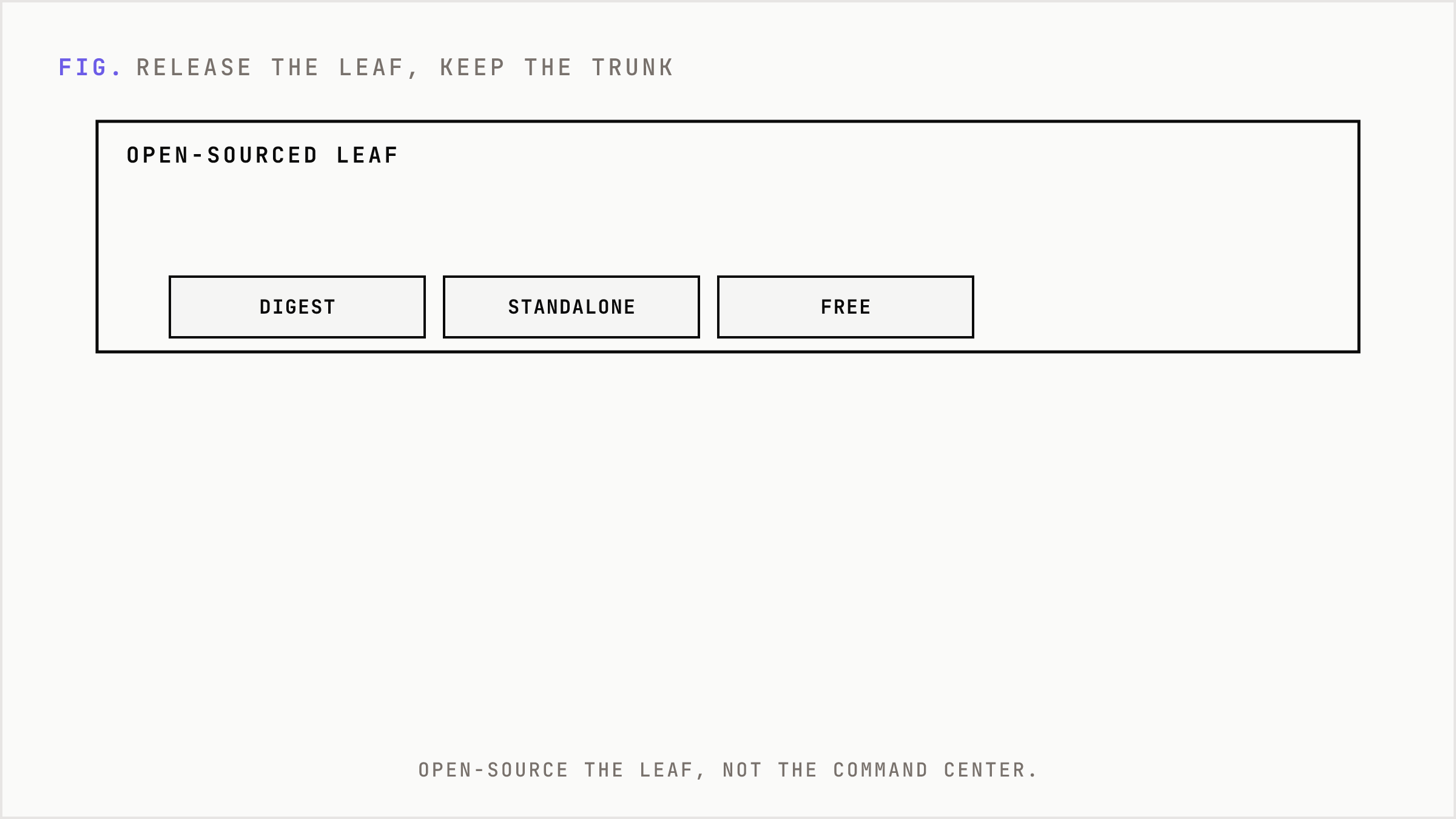
What stays the same is the discipline behind it. You still build to spec. You still keep the expensive parts, the orchestration, the data, the judgment, inside the system where they belong. Open-sourcing the digest does not mean open-sourcing the command center. It means releasing the leaf, not the trunk.
The trade-off is real and worth naming. You are giving away working tools for free, and a free tool is not a billable hour. The bet is that the proof is worth more than the price you could have charged for the tool itself. In a market starved for builders who actually ship, a standalone artifact with your name on it does more selling than any deck, because it removes the one question the buyer cannot otherwise answer: can this person actually build the thing.
That is the whole play. Build the system. Cut it into blocks because you should anyway. Find the blocks that stand alone. Release them, write the post off the release, and let the working tool say the thing you would otherwise have to claim. The WhatsApp digest was the first one. It will not be the last.