Nyyon · Blog
From Campaigns to Systems: How AI Is Rewiring Conversion Growth
How AI shifts marketing from campaigns to continuous systems, driving lower CAC, faster learning cycles, and scalable conversion growth.
AI is not improving marketing by making campaigns better. It is replacing campaigns with systems.
The Shift: From Bursts to Loops
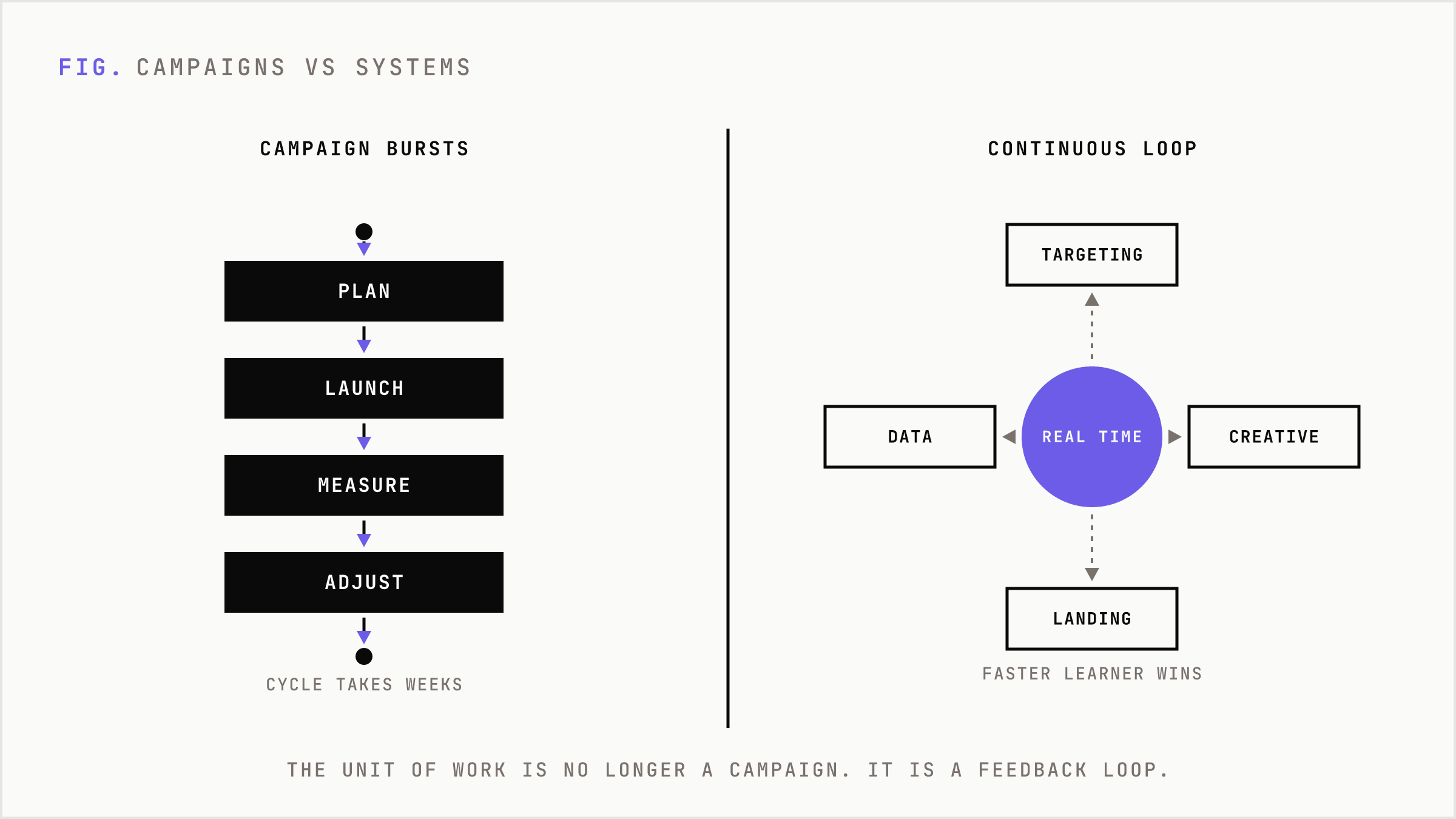
Traditional growth runs in bursts. Plan, launch, measure, adjust. The cycle takes weeks. By the time insights arrive, the market has already moved.
AI collapses that loop into something closer to real time. Instead of discrete campaigns, you get continuous optimization across targeting, creative, and landing experience. The unit of work is no longer a campaign. It is a feedback loop.
This matters because conversion is not constrained by reach anymore. It is constrained by relevance and speed. Whoever learns faster captures more efficient traffic.
Personalization at Scale Is the Primary Lever
Most conversion gains now come from matching message to individual context. Not better copy in aggregate. Better alignment per user.
AI systems generate variations of copy, visuals, and offers dynamically. A user browsing on mobile at night sees something different than a returning desktop user during work hours. The difference is not cosmetic. It reflects intent signals, past behavior, and likelihood to convert.
This is where lift comes from. Not more impressions. More relevance per impression.
Teams that still think in personas miss this. Personas are static abstractions. AI segmentation is fluid and probabilistic. It updates as behavior changes.
Predictive Intent Beats Reactive Targeting
Most ad systems still optimize after the fact. They react to clicks and conversions. The more advanced setups predict conversion before it happens.
Predictive models trained on historical paths identify users who are likely to convert earlier in their journey. That allows budget to be deployed before competition increases auction pressure.
The result is simple economics. Lower cost per acquisition because you are not bidding at peak intent with everyone else.
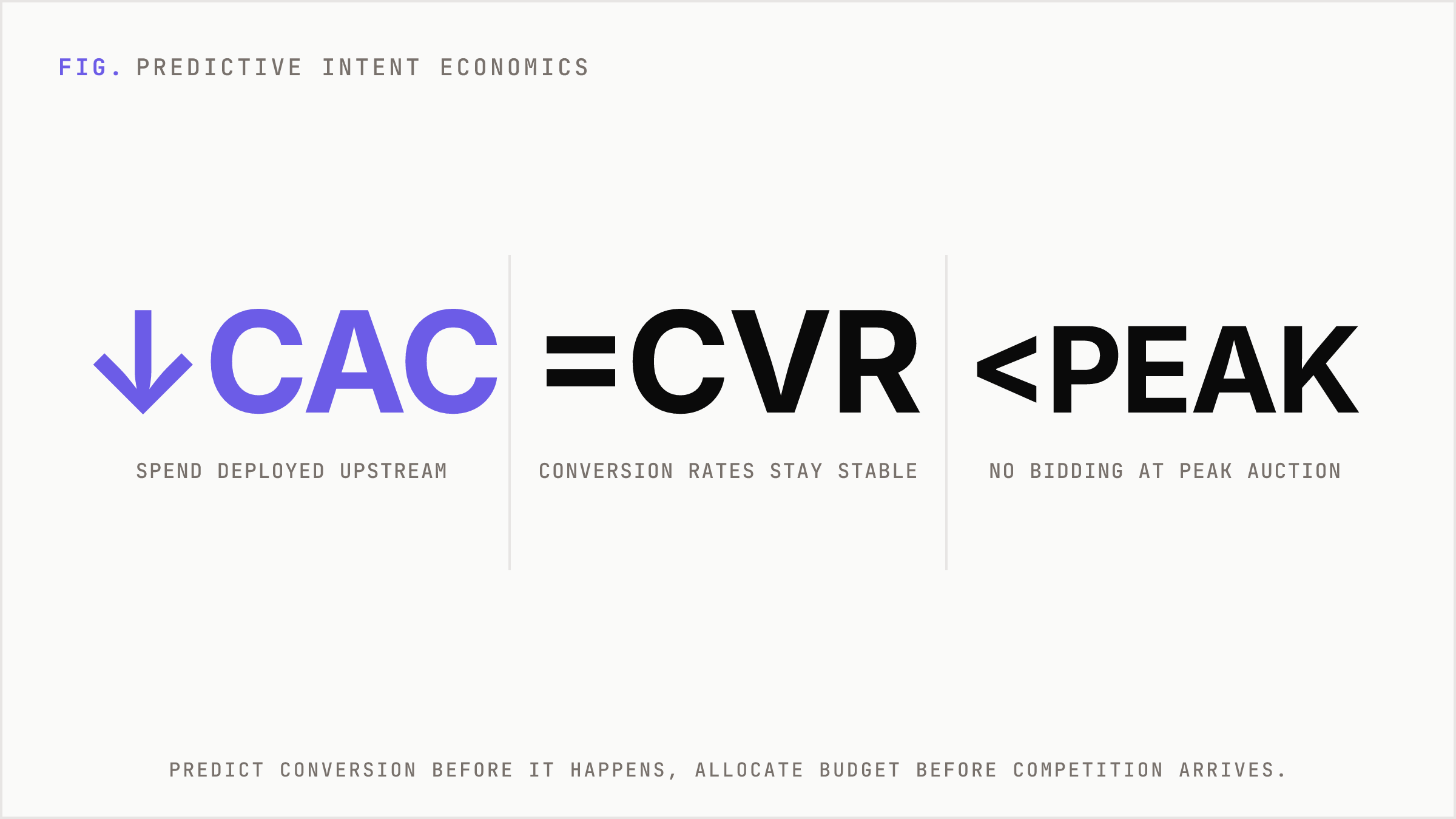
For example, a SaaS company using predictive scoring can prioritize users who resemble past high value customers even if they have not shown explicit buying signals yet. The system allocates spend upstream. Conversion rates stay stable while costs drop.
Creative Velocity Is Now a Performance Variable
Creative used to be a bottleneck. A team would launch a handful of ads and iterate slowly.
AI removes that constraint. Hundreds or thousands of variants can be generated and tested simultaneously. Not just headline swaps. Structural variations in tone, framing, and offer positioning.
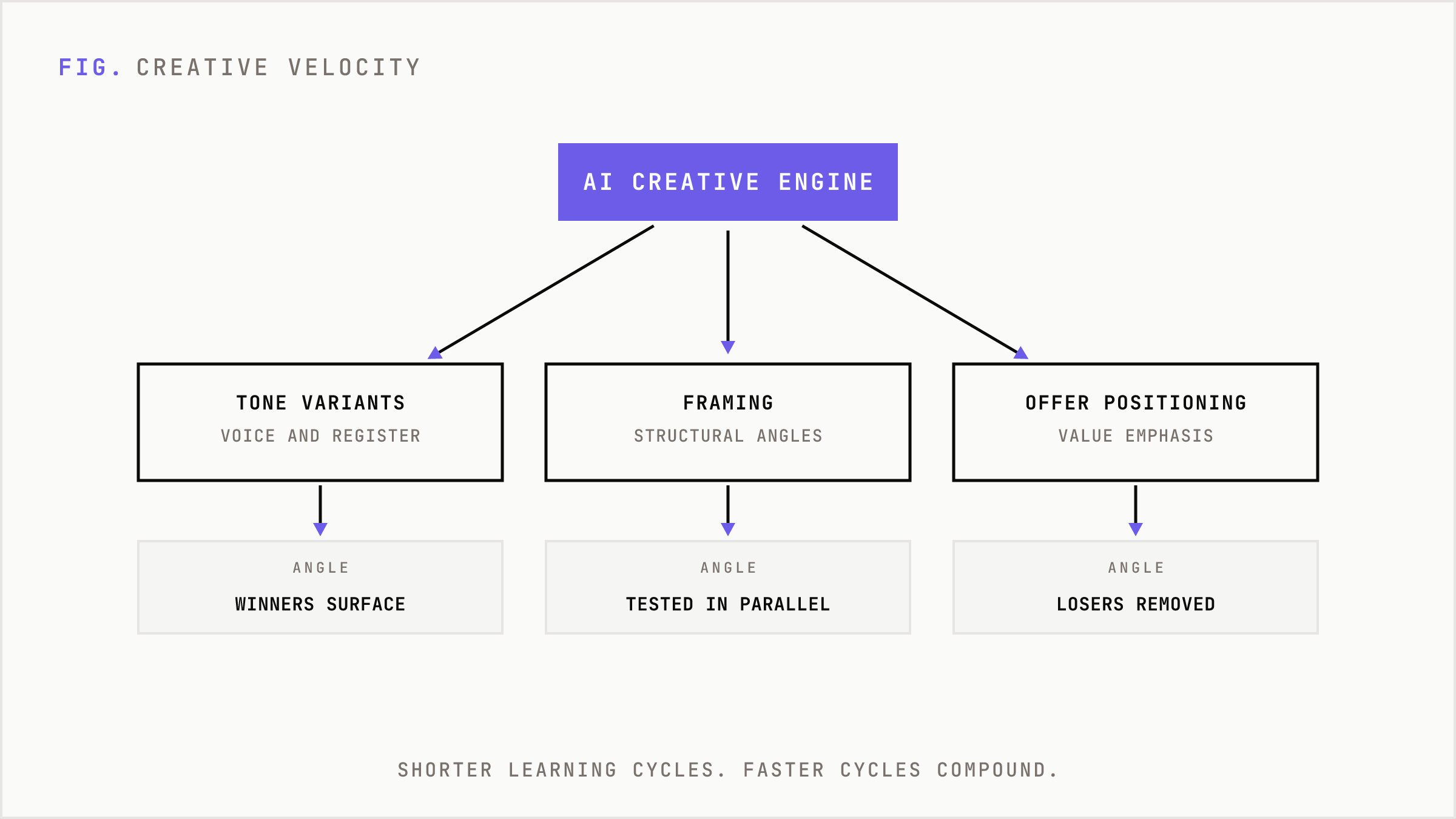
This changes how performance emerges. Instead of debating ideas upfront, teams let the system explore the space. Winning combinations surface quickly. Underperformers get removed automatically.
The advantage is not just better ads. It is shorter learning cycles. Faster cycles compound.
Message Market Fit Becomes Measurable
Historically, messaging decisions relied on intuition and brand guidelines. AI introduces measurement into that layer.
NLP models can analyze which language patterns correlate with conversion. Tone, sentiment, reading level, and structure become variables you can tune.
This does not eliminate creative direction. It grounds it. Instead of arguing about what sounds right, teams can see what performs and why.
Over time, this builds a dataset of effective communication patterns specific to your market. That dataset becomes an asset.
The Landing Page Is No Longer Static
Most funnels still break between the ad and the landing page. The message changes. The context is lost.
AI systems close that gap. Landing pages adapt in real time based on the upstream context. Keyword, creative, audience segment, and even device type feed into layout and copy decisions.
A user clicking a pricing focused ad sees pricing emphasized. A user coming from educational content sees more explanation and proof.
This reduces drop off caused by mismatch. It also increases the effective value of each click.
First Party Data Becomes the Core Asset
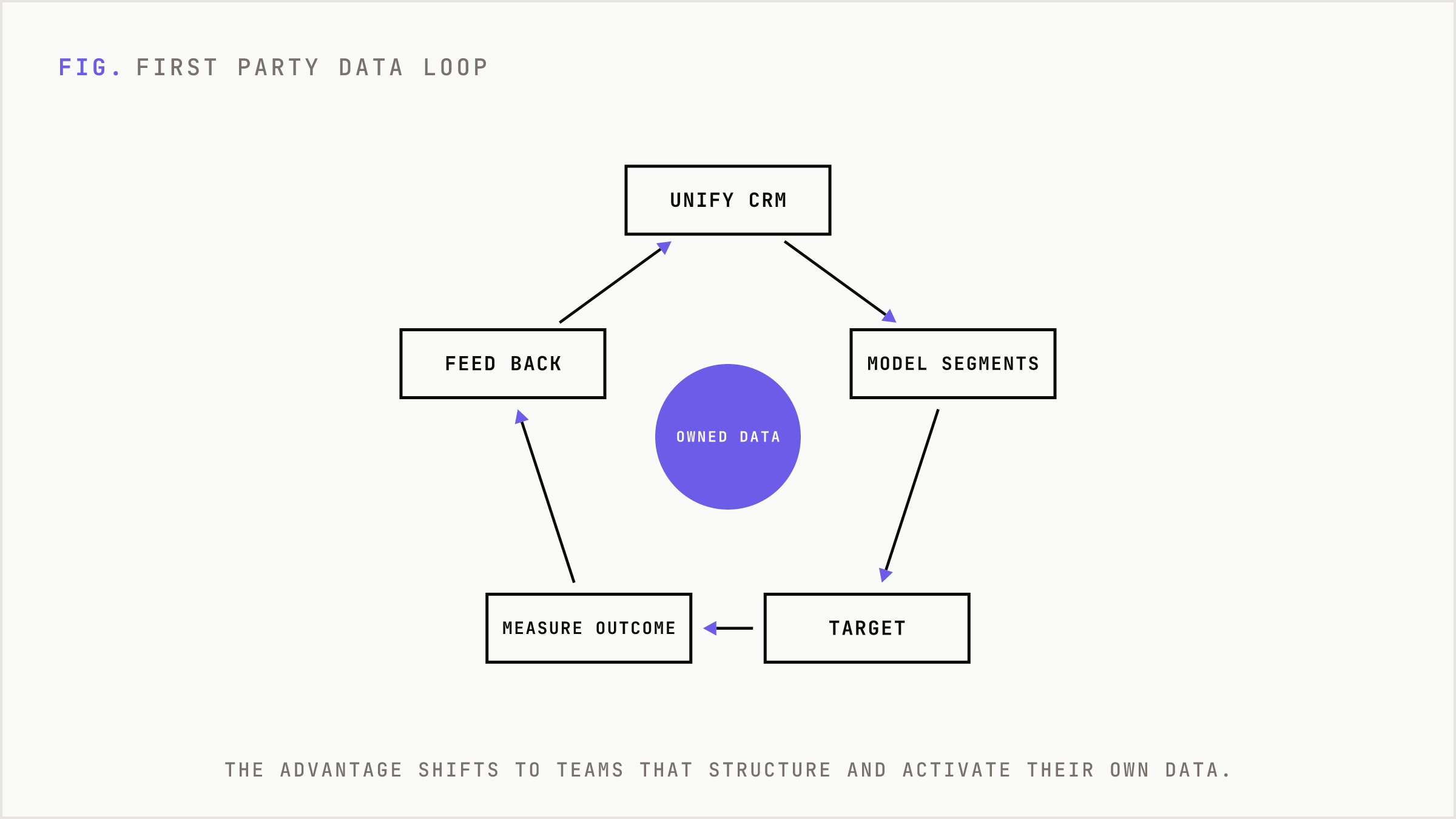
As third party tracking weakens, the advantage shifts to teams that can structure and activate their own data.
AI makes this usable. CRM records, behavioral data, and transaction history get unified into segments that can be targeted and modeled.
Lookalike modeling improves because the input data is richer. Retargeting becomes more precise. Lifecycle marketing becomes integrated instead of siloed.
The key is not collecting data. It is building feedback loops where outcomes feed back into targeting and creative decisions.
Attribution Moves from Simple to Probabilistic
Last click attribution is easy but misleading. It overvalues bottom funnel channels and undervalues everything else.
AI based attribution models assign weighted influence across touchpoints. They estimate how each interaction contributes to conversion probability.
This changes budget allocation. Channels that assist conversions get more credit. Spend shifts accordingly.
For example, mid funnel content that previously looked unprofitable may show strong influence in conversion paths. That insight changes how teams invest.
Autonomous Media Buying Is Already Here
Bid adjustments, placement decisions, and budget allocation are increasingly handled by AI agents.
These systems react faster than human operators to auction dynamics. They reduce wasted spend during volatility and capture opportunities in real time.
The role of the media buyer shifts from execution to constraint setting. Define goals, guardrails, and inputs. Let the system handle the rest.
Teams that resist this shift lose on speed alone.
Conversational Interfaces Reduce Friction
Forms are a poor interface for capturing intent. They are rigid and often mistimed.
AI chat interfaces on site or via messaging channels allow users to express intent naturally. The system can respond, qualify, and guide in real time.
This is especially effective for complex or high consideration products. It shortens the path from interest to action.
It also generates structured data from conversations, feeding back into targeting and optimization.
Offer Optimization Becomes Continuous
Pricing and incentives are often treated as fixed. AI turns them into variables.
Different segments can be shown different bundles, discounts, or payment options based on predicted sensitivity.
This moves beyond blanket promotions. It identifies where discounts actually change behavior and where they simply reduce margin.
Churn Prediction Extends Conversion Windows
Conversion is not a single moment. It is a path with drop off points.
AI models can predict when a user is likely to abandon before conversion. That enables targeted interventions.
Email nudges, retargeting, or adjusted offers can be triggered at the right moment. Recovery rates improve without increasing top of funnel spend.
Cross Channel Learning Is the Missing Layer
Most organizations still operate channels in isolation. Insights from paid ads rarely inform email, landing pages, or sales scripts.
This is inefficient. The same patterns that drive clicks often drive conversions elsewhere.
AI can unify these signals. If a certain framing increases ad performance, it can be propagated across other touchpoints.
This creates consistency and compounds gains across the funnel.
The Real Constraint Is Not Tools
Most of these capabilities are already available. The constraint is how teams are structured.
Organizations built around campaign cycles and channel silos cannot take advantage of continuous systems. Decision making is too slow. Data is fragmented.
The bottleneck shifts from production to strategy. What do we test, what constraints do we set, and how do we differentiate.
Without clear positioning, AI systems converge on similar patterns. That leads to creative homogenization and erodes advantage over time.
Durable Advantage Comes from Feedback Loops
The strongest teams are not the ones with the best tools. They are the ones with the best data and learning systems.
Every interaction feeds back into the model. Every campaign improves the next iteration automatically.
This creates compounding gains. Small improvements accumulate into meaningful differences in CAC and lifetime value.
Over time, this becomes hard to replicate. Competitors can copy tactics but not the underlying dataset.
Where Most Teams Still Waste Time
There is still an overemphasis on generic AI copywriting. It provides baseline improvements but no real edge.
The leverage comes from integration. Data, testing, distribution, and feedback loops working together.
Teams that treat AI as a tool for faster execution miss the point. It is a system for faster learning.
What This Means for Founders and Investors
Growth efficiency is becoming a function of system design. Not just spend.
Companies that build continuous optimization loops will scale faster with lower acquisition costs. They will also adapt faster as markets shift.
This changes how you evaluate marketing performance. Look beyond campaign metrics. Look at learning speed, data quality, and system integration.
The gap between teams that adopt this model and those that do not will widen quickly. Not because of better ideas, but because of better feedback loops.
The Direction Is Clear
Marketing is moving toward fully autonomous, goal driven systems. Human input defines strategy and constraints. AI handles execution and optimization.
Personalization will extend across the entire funnel. Attribution will become more accurate. Budget allocation will become more dynamic.
The question is not whether this shift happens. It is how quickly teams restructure around it.
Those that do will not run better campaigns. They will run better systems.
FAQ
What is the main advantage of AI driven marketing systems?
The main advantage is continuous optimization. AI systems learn and adapt in real time, improving targeting, creative, and conversion without waiting for manual campaign cycles.
How does predictive intent modeling reduce CAC?
It identifies users likely to convert earlier, allowing marketers to allocate budget before competition increases costs, resulting in more efficient acquisition.
Why is creative velocity important?
Higher creative output enables faster testing and learning, allowing top performing variations to emerge quickly and improving overall campaign performance.
What role does first party data play?
First party data provides richer signals for targeting and modeling, making personalization and lookalike strategies more accurate, especially as third party tracking declines.
Are AI tools alone enough to improve conversion?
No. The advantage comes from integrating AI into a system with strong data, feedback loops, and cross channel learning, not just using isolated tools.