Nyyon · Blog
Claude Fable Is a RevOps Move, Not a Builder Win
Claude Fable burns more tokens for marginally better results than Opus 4.8. The goal-loop framing is Anthropic's revenue play, not yours.
Claude Fable is a RevOps move dressed as a builder upgrade. It spends a lot of tokens to land marginally better results than Opus 4.8, and the whole goal-oriented loop story benefits Anthropic's revenue more than it benefits the person paying the bill. People raved about it. I found it underwhelming. The model is fine. The mindset it pushes is the expensive part.
Here is the claim everyone is repeating: Fable is a Mythos-class model that keeps 95 percent of sessions on itself instead of routing up to Opus, runs in goal-oriented loops, and grinds away with domain-specific safeguards until it reaches an outcome. That sounds like autonomy. Read it again as a pricing decision and it sounds like a meter running.
What the loop actually sells
A goal-oriented loop is a model that keeps working on its own process until it decides it has hit the goal. No human checkpoint in the middle. No plan it is forced to follow. Just iterate until satisfied.
The pitch is that you stop micromanaging and let the model figure it out. The reality is that you stop watching the meter while the model spends your budget exploring paths a senior person would have ruled out in one sentence.
It might reach the actual goal. It will also spend half your budget getting there. That is not capability. That is a billing model. The fewer guardrails you set, the more tokens the loop consumes, and the more tokens the loop consumes, the better that looks on Anthropic's revenue line. The incentive points away from you.
A senior CTO solves 90 percent of this for free
Here is the part the Fable narrative quietly skips. Most of the token expenditure in a goal-oriented loop is not the cost of doing the work. It is the cost of the model rediscovering what a competent human already knows.
A senior CTO weighing in with one meaningful insight at the start solves roughly 90 percent of that waste. Not by writing the code. By setting the goal correctly, naming the constraint that matters, and pointing the work down the right path before a single token gets spent wandering.
That is the whole game. The expensive part of building is rarely the execution. It is the wrong direction held for too long. A clear plan run with intent beats an unsupervised model chasing a vague target every time, on quality and on cost.
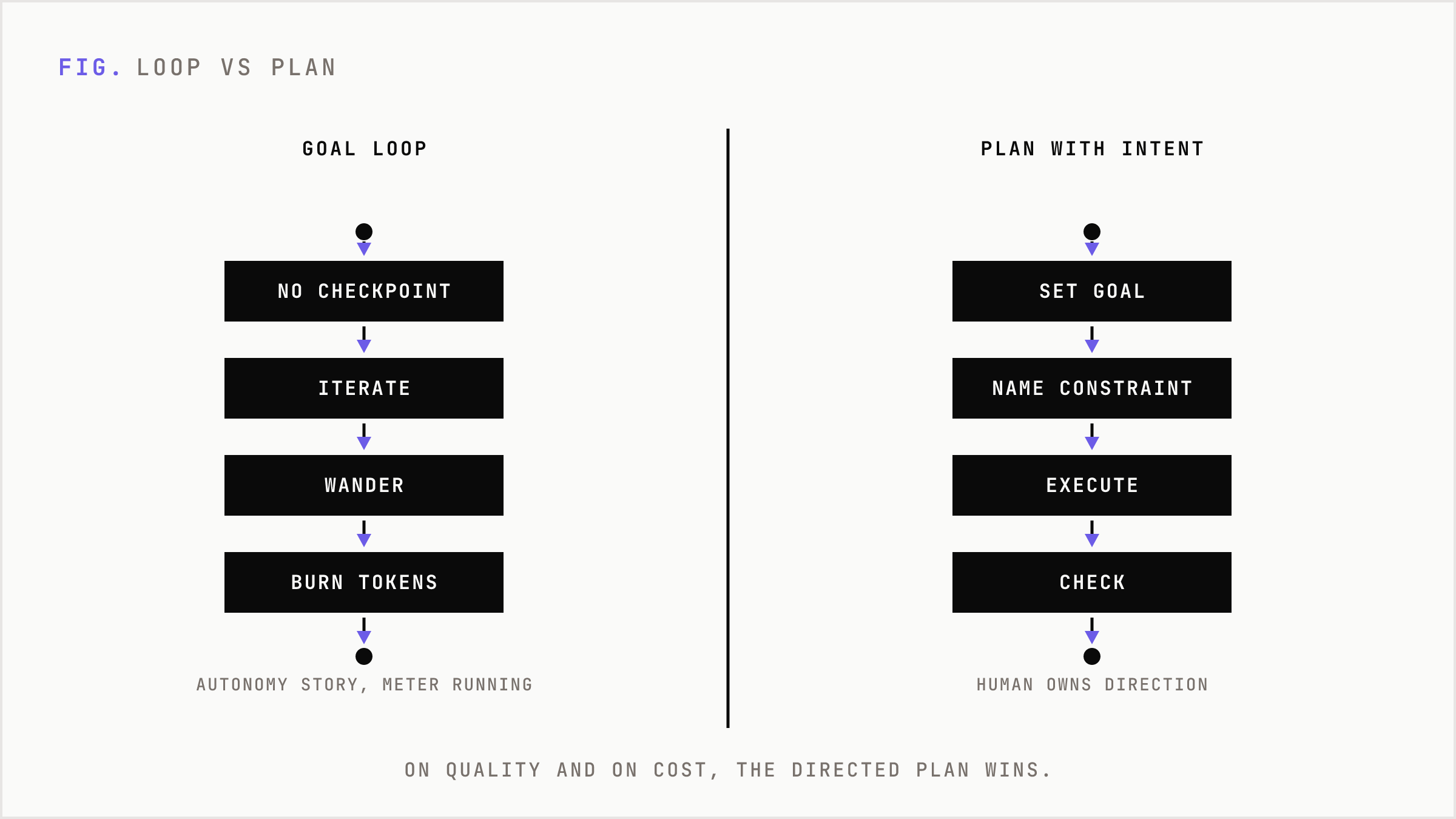
This is the same logic we already apply to routing. Hard tasks go to the big model. Easy tasks go to the small model. The high-value decisions go to the people who understand the business. The execution and the small decisions go to the builder. Then you run a loop that checks the builder actually applied those decisions to the product, instead of leaving them floating in a doc nobody read.
The mechanism: gateways, tools, workflows
The cleaner way to think about an AI system is gateways, tools, and workflows.
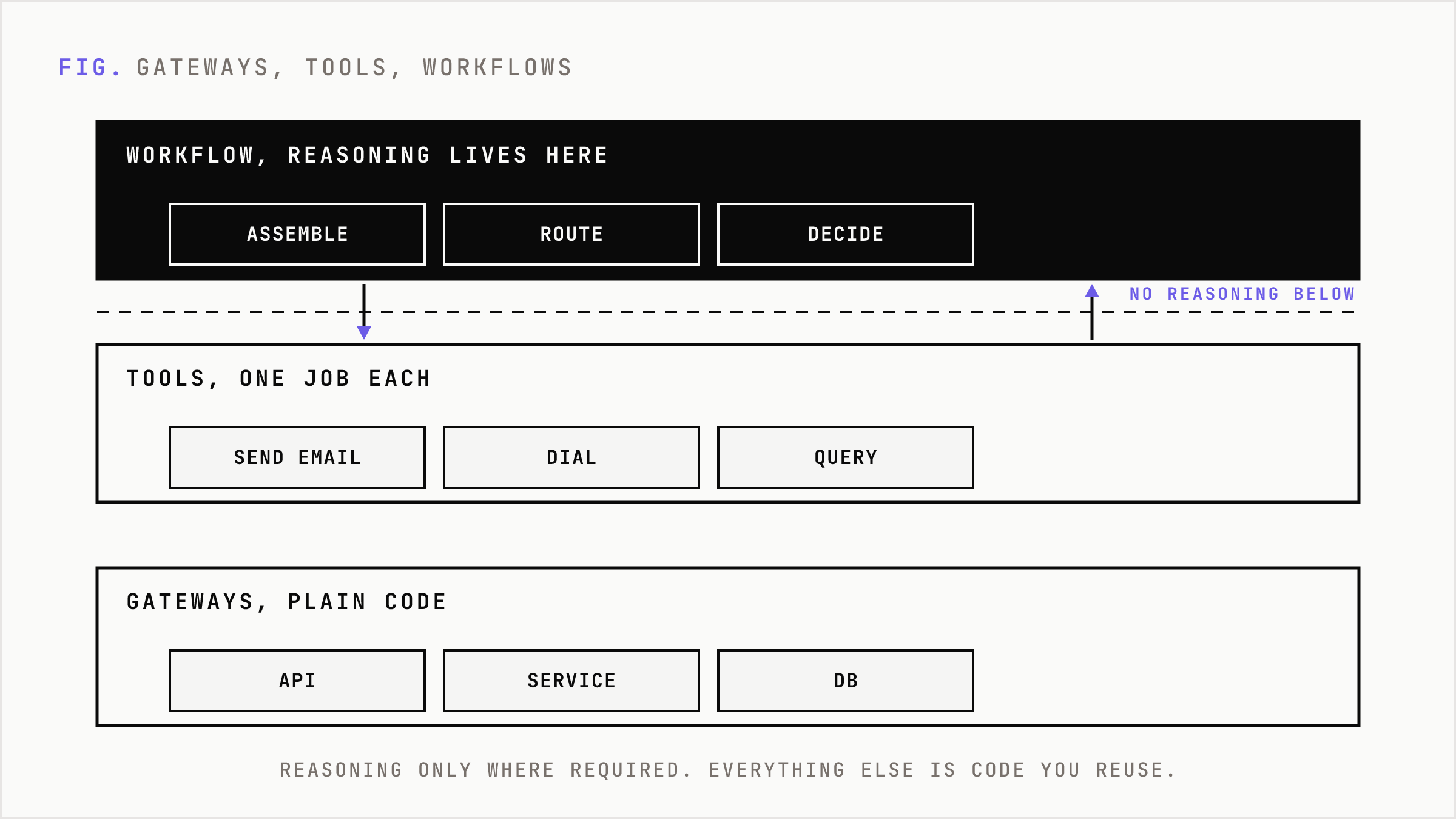
A gateway is plain code that talks to a service. A tool is plain code that does one specific thing through a gateway. A workflow is the path the AI assembles from tools and gateways to reach an outcome. Reasoning lives only where reasoning is required. Everything else is just code you write once and reuse.
I built a command center for a business funding operation on exactly this principle. Email outreach, the AI SDR, the dialler operations, all the logic that would have been impossible to coordinate by hand became manageable once it was framed as gateways the AI could call, tools that acted through them, and workflows that strung them together. The AI is not writing fresh requests every time. It is calling tools it already has, inside a workflow that already makes sense.
Compare that to a Fable-style loop. The loop reasons everywhere, including the places that need no reasoning at all. Calling an API does not require a model to think. Sending an email does not require a model to think. When you let the loop reason across the whole job, you pay reasoning prices for clerical work. That is the endless token expenditure the autonomy story never mentions.
The cost of defaulting to the biggest model
Most teams still point the largest frontier model at every task because it is the lazy default. The cost of that laziness is direct. Harvey cut its inference costs by roughly three times by routing simpler tasks to GLM 5.1 and saving Claude Opus for the intensive work. Same outcomes, a third of the spend, because someone bothered to decide which task deserved which model.
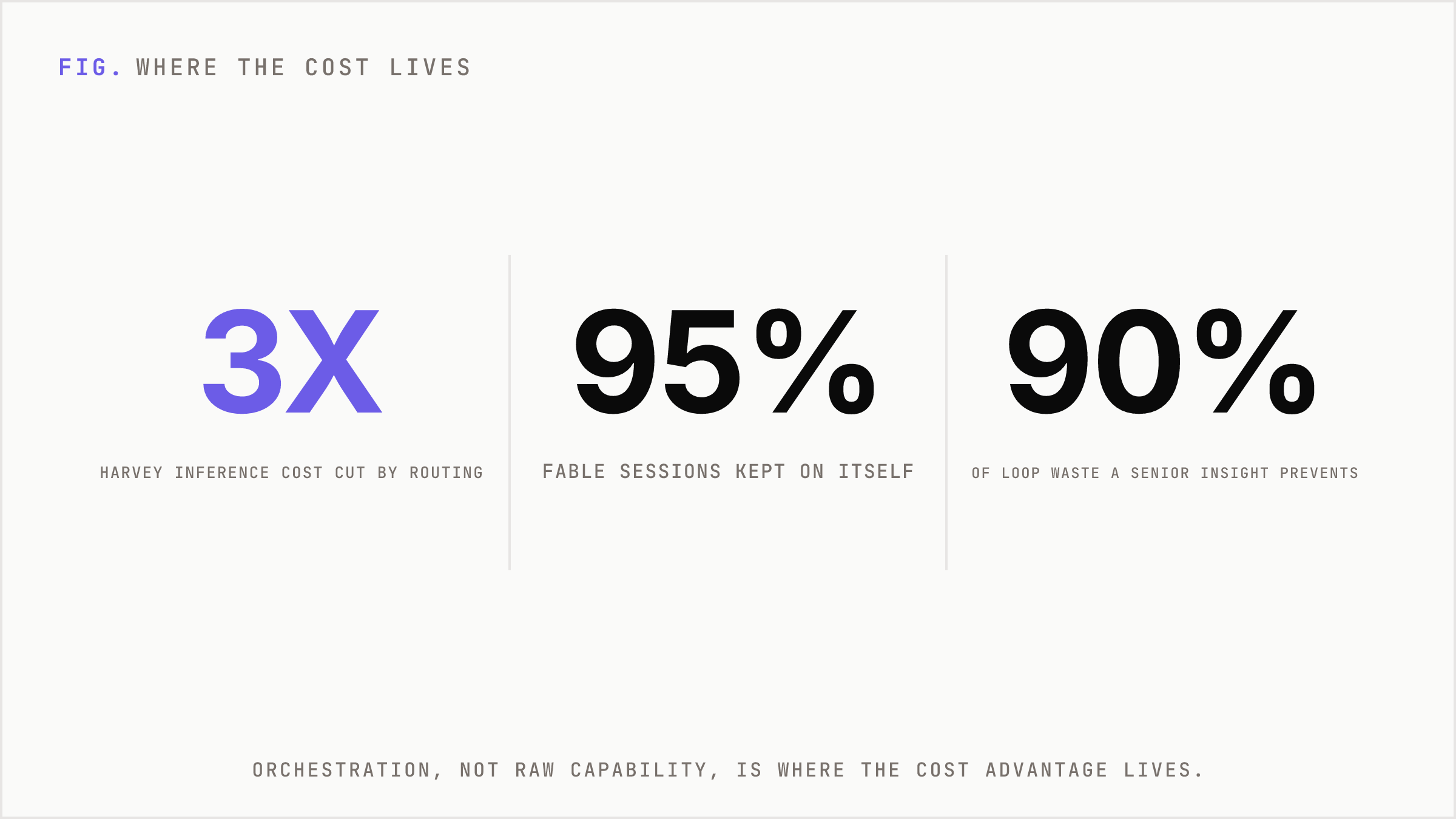
Fable inverts this. By design it keeps 95 percent of sessions on itself rather than routing. That is sold as efficiency. For your bill it is the opposite. A system that refuses to route down is a system that defaults to spending. The signal you want is the one Harvey acted on: orchestration, not raw capability, is where the cost advantage lives.
Model orchestration is the practice of matching each task to the cheapest model that can do it well, and reserving the expensive model for the work that genuinely needs it. That is a decision discipline. It does not come bundled in a model that wants to handle everything itself.
When the loop is actually the right move
I am not arguing the loop is never useful. It earns its place when the goal is genuinely fuzzy, the search space is large, and the cost of a wrong human guess is higher than the cost of letting the model explore. Rare. Real, but rare.
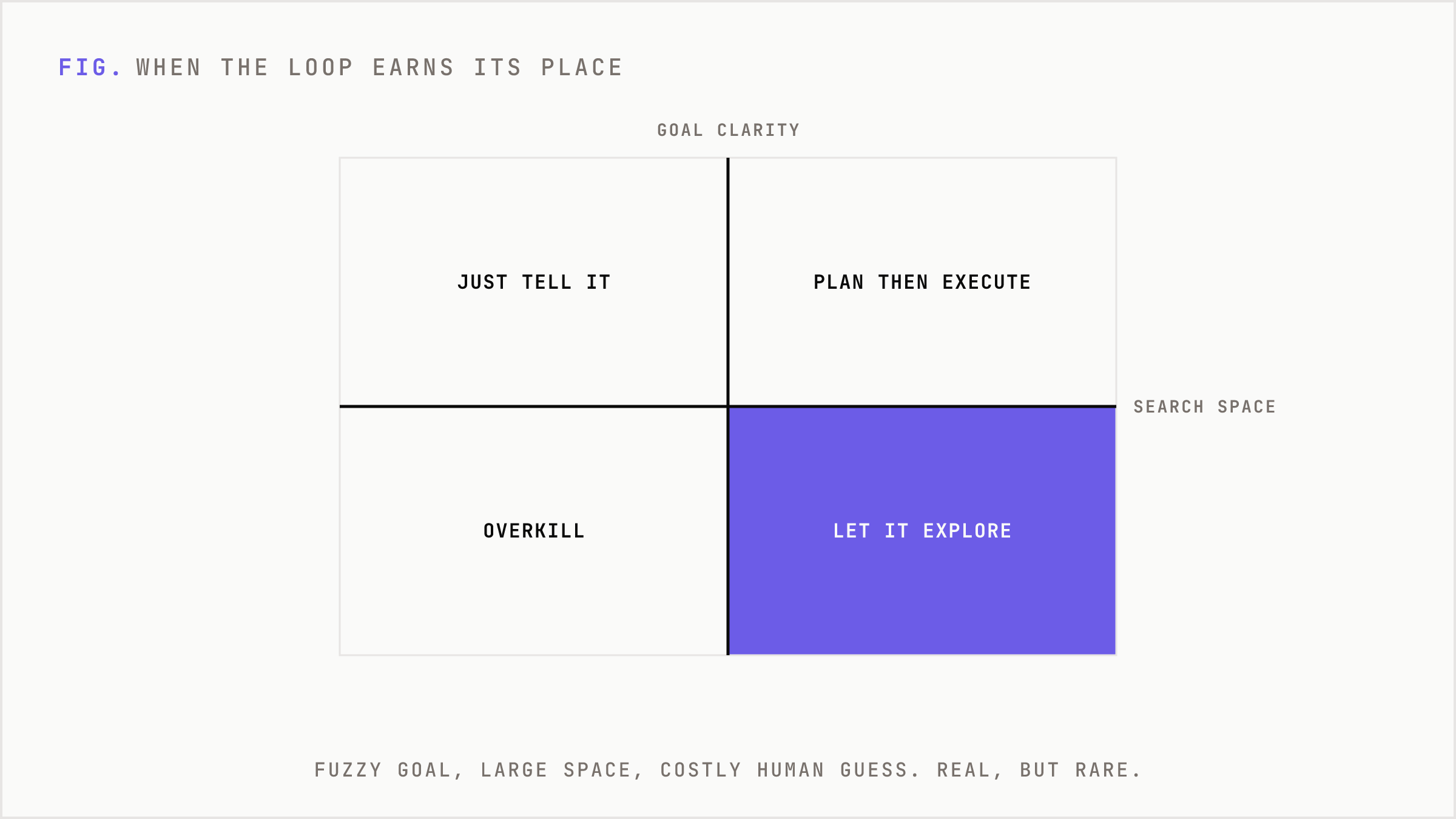
The trade-off is honest. Set tight goals and a clear plan, and you cap your spend while keeping a human accountable for direction. Let the loop run free, and you trade money and oversight for the chance the model finds something you did not specify. For most marketing and growth work, the goal is not fuzzy. You know what you want. The loop is paying to discover what you could have told it in one line.
What to do instead
Treat Fable as a model, not a methodology. Use it where it is the best tool for a hard reasoning task. Do not adopt the goal-oriented-loop worldview as your default operating posture, because that worldview was designed around Anthropic's revenue, not your margin.
Three moves that hold regardless of which model ships next.
Put the senior insight at the front. One sharp constraint from someone who understands the problem removes most of the wandering before it costs anything.
Push reasoning to the edges. Gateways and tools are code. Workflows are assembly. Reserve model reasoning for the decisions that actually require judgment, and write everything else once.
Route by task difficulty, on purpose. The big model for the hard call, the small model for the rest. A loop that refuses to route is a loop that defaults to spending, and you are the one paying.
The autonomy pitch is seductive because it promises you can stop thinking. The bill is what you pay for that promise. A clear plan, a senior decision, and reasoning placed only where it belongs will beat an unsupervised loop on cost and on quality, this quarter and the next.