Nyyon · Blog
The hardest part of agentic AI may be rebuilding the business - Help Net Security
The bottleneck in agentic AI is translating the veteran's hunch into an explicit rule a machine can execute, not model capability.
Start with the veteran on your ops team. She bends an SLA for the client she knows is good for it, waves through an exception that technically should stay flagged, holds a shipment because something about the order smells wrong. Nobody wrote that call down. She built it from years of edge cases, and it is real judgment, which is exactly why skipping it is dangerous. The hardest part of agentic AI is translating that hunch into an explicit rule before the agent runs a single case, and that work, not model capability, is the actual bottleneck. Hand her process to an agent, and the agent executes rules. It hits the first case the hunch used to quietly cover and either freezes or acts wrong with total confidence.
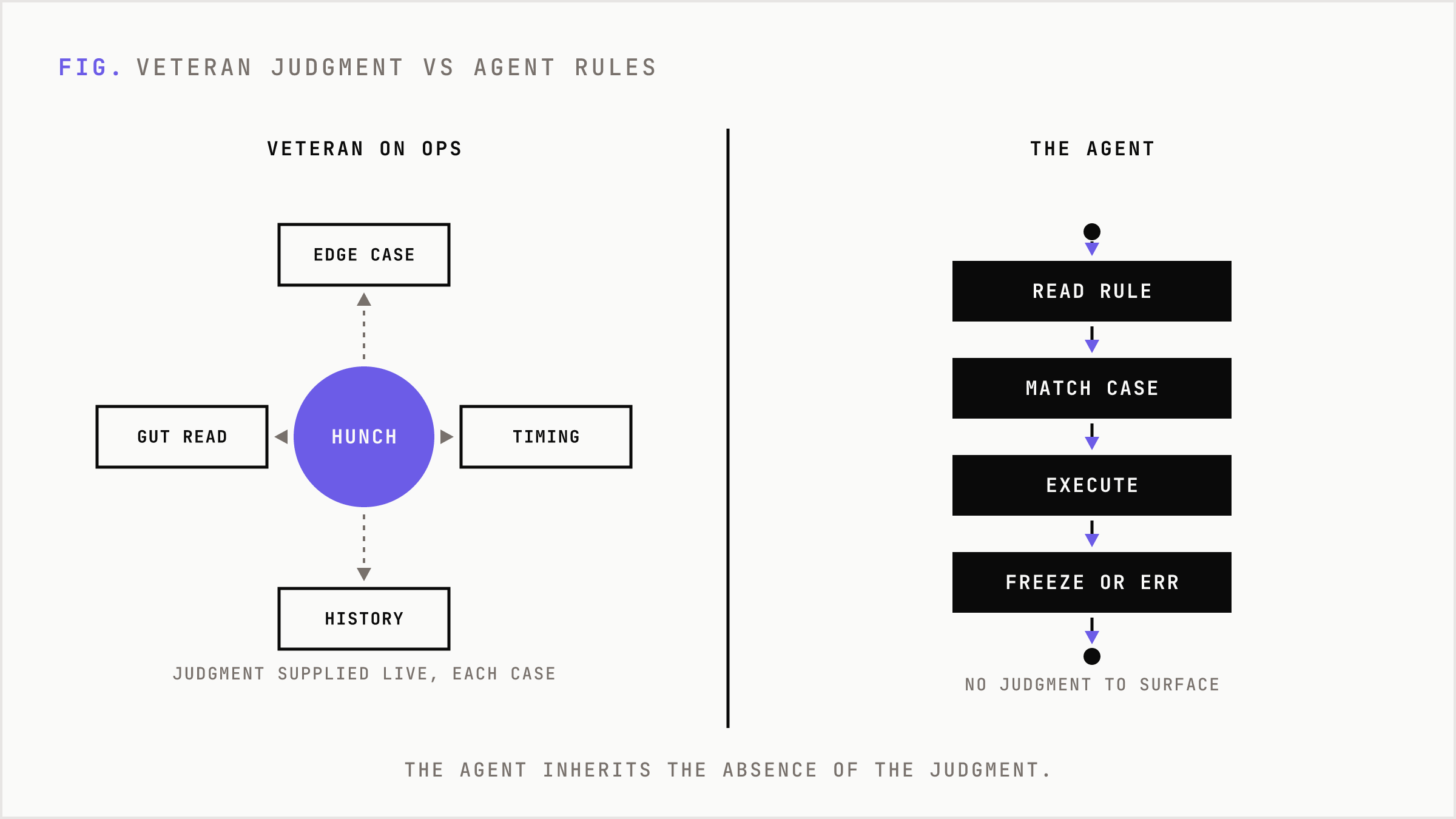
I build these systems for clients, and the model is almost never where a pilot stalls. Agents already call tools, read pages, chain steps. They stall on a hunch nobody has ever stated as a rule.
The model is the easy part, the hunch is the hard part
Business hunch is compressed pattern-recognition: the judgment call a veteran employee makes without being able to explain the rule behind it. In the 2026 agentic era, that hunch is the layer your process actually runs on, and it lives in a few people's heads.
Founders read "agents are getting smarter" as "agents can figure out our process." The process was never captured in any form. It lived as instinct, applied fresh to each edge case. A smarter model executes the logic you hand it. It has nothing to surface, because the judgment was always supplied live by a human standing in the loop.
So the model calling an API cleanly is table stakes. Whether that API call is the right call, on this order, for this client, at this moment, is the part that used to live in one person's gut. That is the summit nobody has climbed, because it never had to be climbed before.
An agent inherits the absence of the judgment
Walk one case. Your accounts-receivable clerk sees an invoice for $47,000 that fails a validation check, three times the client's usual order. She clears it in eight seconds because she remembers this client always ramps in Q4 and always pays. She is reacting to a signal she has never named: history plus timing plus a gut read on this account.
Hand receivables to an agent. The invoice fails the same check. The agent has one instruction: flag anything that fails validation. So it flags the $47,000 invoice, holds payment, emails the client for confirmation, and delays a good customer over a false alarm. Or, worse, someone spec'd it to auto-approve past a dollar threshold, and it waves through the next invoice that really is fraud with the same eight-second confidence.
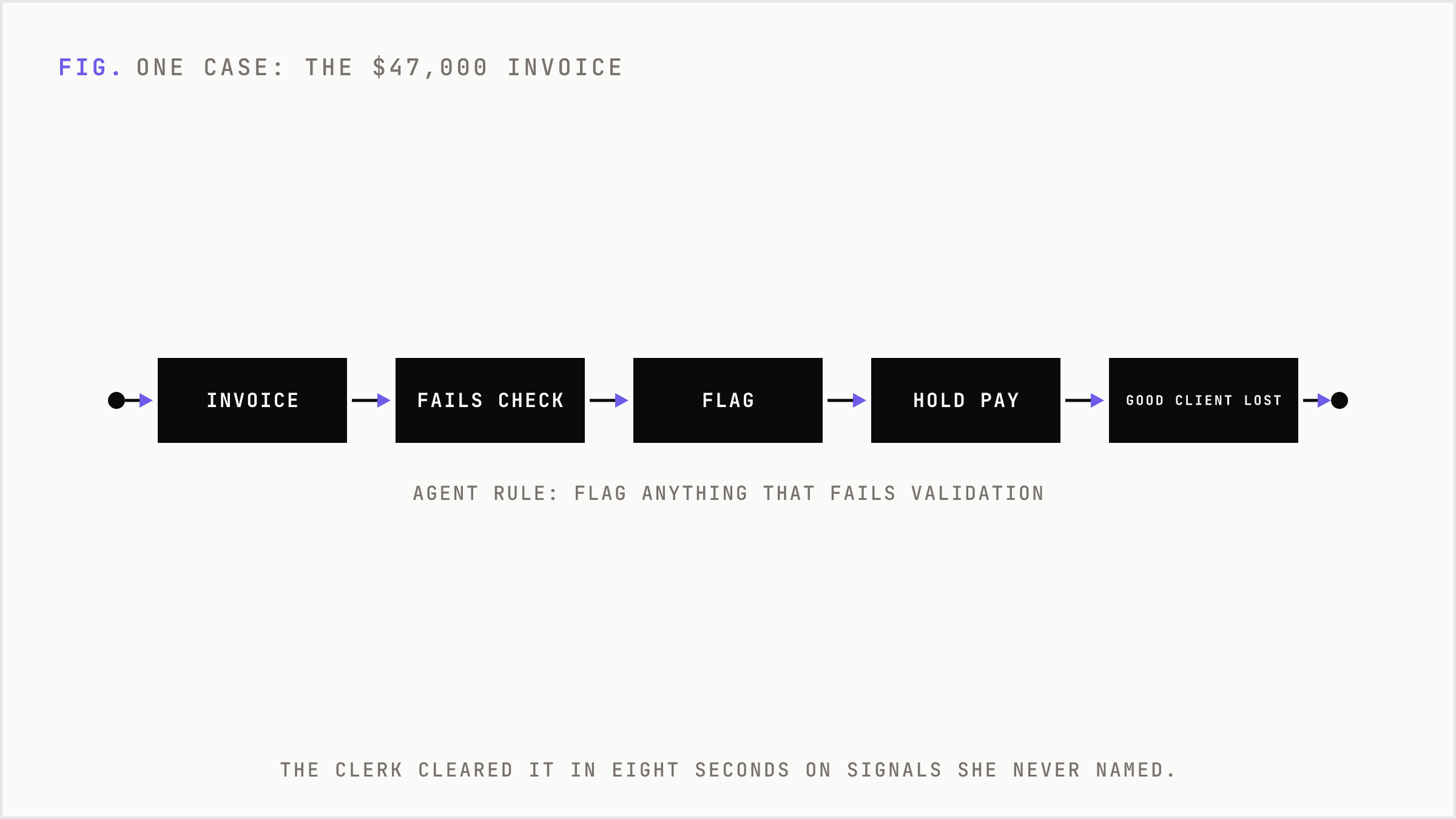
Either way the agent carries the absence of her judgment straight into production. Now someone is debugging a rule that lived only as instinct, mid-incident, with a customer already annoyed. You are paying to reverse-engineer a decision that was working fine right up until you removed the person who made it.
The real project is naming the signal behind the hunch
Translating a hunch into a rule means, for each judgment call in a process, naming the actual signal the experienced person reacts to. For the receivables clerk: payment history over the last eight quarters, seasonality of this client's ordering, whether the shipping address matches the account on file, whether the contact email domain is the one on record. Those are thresholds and signals a machine can act on. The instinct was a fast blend of all of them.
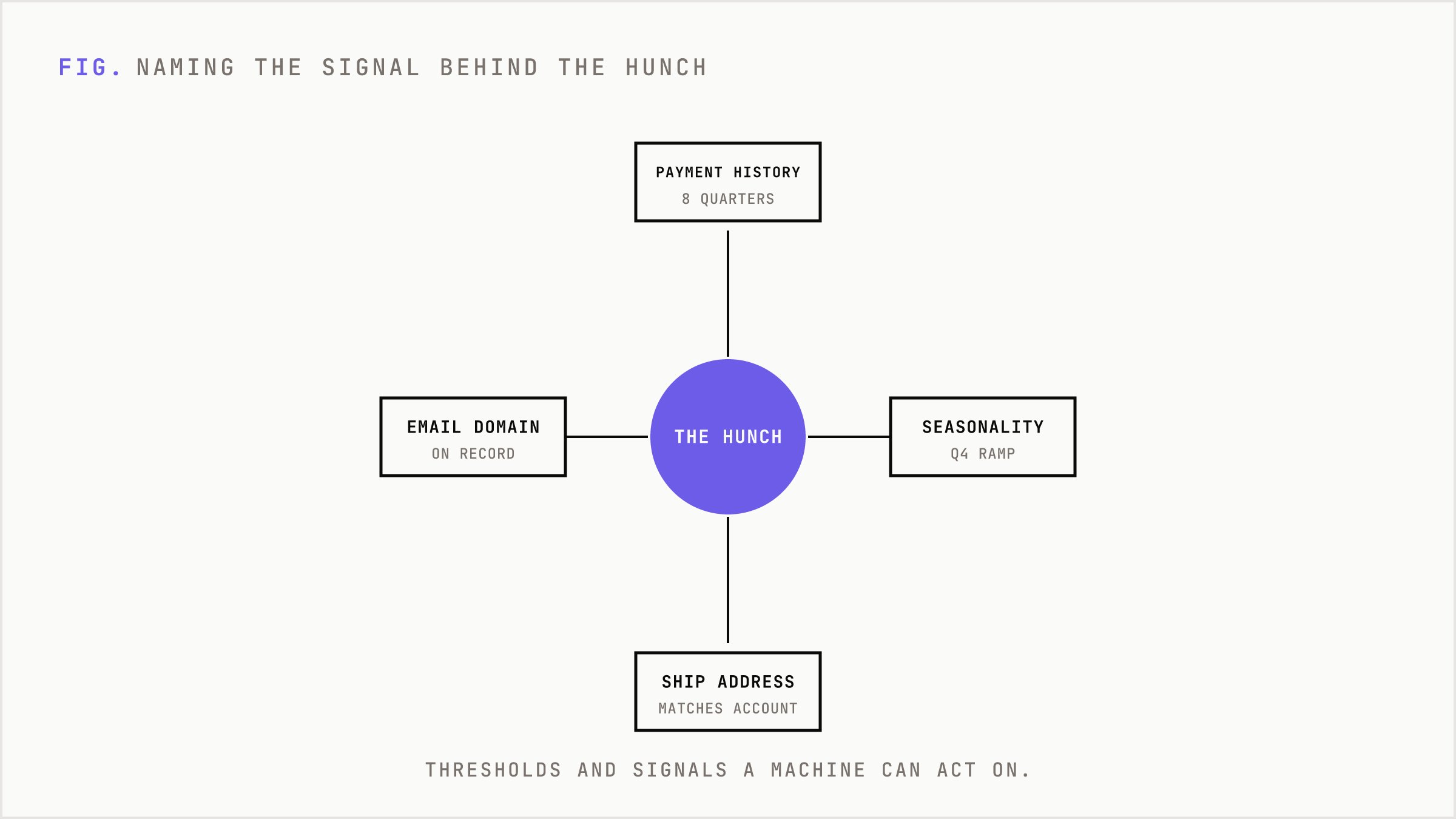
This is org design and domain expertise. Prompt engineering gets you nowhere, because the missing piece was never phrasing. The missing piece is the decision logic itself, which no document in the building holds.
And this is why the work sits unowned. No existing team has the mandate to run it. The engineers do not know the exceptions. The ops veterans know the exceptions but have never had to state them as thresholds. The vendor knows neither. So the buy-and-plug pilot ships against a process that runs on judgment nobody wrote down, and it automates the hole where the judgment used to be.
Handling ambiguity and handling it correctly are two different bars
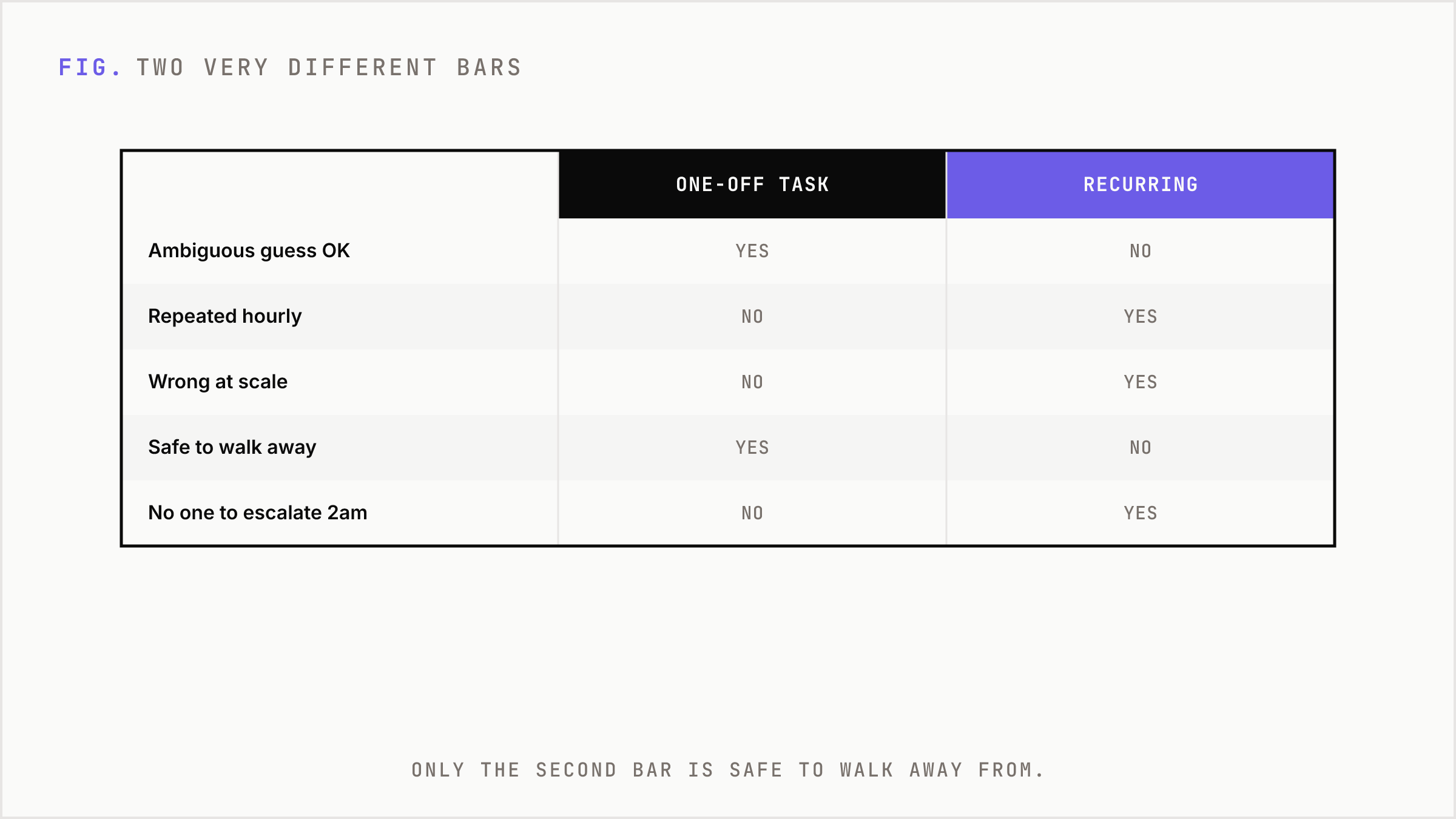
The fair objection: modern agents handle ambiguity, so you do not need to spec every branch. True for a one-off task. It breaks the moment the agent runs a recurring process with real consequences. An ambiguous guess on a refund, an invoice, or a customer email is a wrong action at scale, repeated every hour with total confidence. An agent improvising on your receivables queue is not clever, it is exposed. Handling ambiguity and handling it correctly every time are two very different bars, and only the second one is safe to walk away from.
The second objection: this is just documentation, and every ERP rollout demanded the same thing a decade ago. Correct, and that is why it deserves respect. Agentic AI reintroduces the discipline ERP demanded, with one change in stakes. The ERP executor was a trained employee who knew when to stop and ask. The agent is autonomous. It runs the exception at 2am with every laptop closed and no one to escalate to. The bar on getting the process explicit went up, so the discipline matters more than it did in 2015.
Translate the hunch before you enable the agent
The move is to translate the hunches in one critical process into explicit rules, thresholds, and signals before you enable any agent against it. Skip that step and you pay for the pilot twice: once to build it, once to rebuild it after it breaks on the case nobody wrote down. I have watched teams burn six weeks of discovery and a vendor retainer to discover the same thing they could have found for free by writing the process down first.
This week, pick the one process you most want an agent to run. Write it down yourself, end to end, including every place a person currently makes a judgment call on instinct. For each of those calls, try to name the actual rule, threshold, or signal behind it: the number, the history, the flag. The branches where you get stuck are the tacit judgment nobody ever captured, and that is exactly where the agent breaks. You have found the real work, and the real cost, before spending a cent on a vendor.
That mapping is the owned-outcome project nobody has time for, and it is the whole game in agentic AI right now. If you have a problem, if no one else can help, and if you can find them, maybe you can hire Nyyon.